Biscayne National Park Information Guide

Welcome to the Biscayne National Park Information Guide.
Here you will find all you need to know about the natural history of the park.
Learn about the geology, trees, mammals, birds, or other plants and wildlife of the area.

-SPONSORED LINKS-
Biscayne Lodging
Biscayne Hotels
Biscayne Maps
Biscayne Camping
Biscayne Weather
Biscayne Vacation Rentals
Hawksbill Turtle - Corel &169;

Sponsored National Park Search

Biscayne National Park Information

  • A Sanctuary for Birds
  • Coral Reefs
  • Establishment
  • Flora & Fauna
  • History
  • Mangrove Forests
  • Pirates
  • Size & Visitation
  • Turtles & Sponges
  • Wreckers

  • 
    

    Establishment

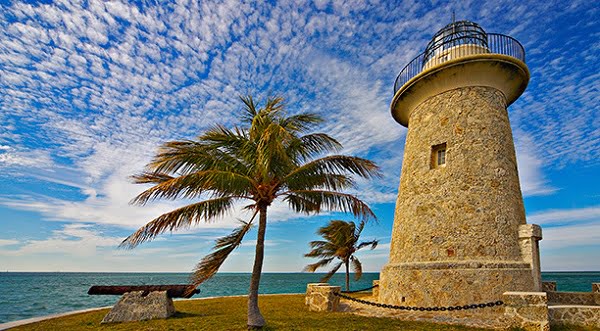
    Biscayne National Park has the simple beauty of a child's drawing. Clear blue water. Bright yellow sun. Big sky. Dark green woodlands. And here and there a boat, a bird. It is a subtropical place where mainland mangrove shoreline, a warm shallow bay, many small islands or keys and living coral reefs intermingle. Together they comprise a vast, almost pristine wilderness and recreation area along the southeast edge of the Florida peninsula. The park, located just 21 miles east of Everglades National Park, was established as a national monument in 1968. In 1980 it was enlarged to 181,500 acres and designated as a national park to protect a rare combination of terrestrial and undersea life, to preserve a scenic subtropical setting, and to provide an outstanding spot for recreation and relaxation.

    Set apart as Biscayne National Monument in 1968. Designated a National Park by Congress and signed by President Jimmy Carter on 28 Jun 1980.

    H.R. 5926 96th Congress - 410gg.

    Establishment; description of boundary; minor boundary revisions; publication in Federal Register

    In order to preserve and protect for the education, inspiration, recreation, and enjoyment of present and future generations a rare combination of terrestrial, marine, and amphibious life in a tropical setting of great natural beauty, there is hereby established the Biscayne National Park (hereinafter referred to in this subchapter as the "park") in the State of Florida. The boundary of the park shall include the lands, waters, and interests therein as generally depicted on the map entitled "Boundary Map, Biscayne National Park", numbered 169-90,003, and dated April 1980, which map shall be on file and available for public inspection in the offices of the National Park Service, Department of the Interior. The Secretary of the Interior (hereinafter referred to as the "Secretary") shall publish in the Federal Register, not more than one year after June 28, 1980, a detailed description of the boundary established pursuant to this section. Following reasonable notice in writing to the Committee on Natural Resources of the United States House of Representatives and the Committee on Energy and Natural Resources of the United States Senate of his intention to do so, the Secretary may make minor revisions in the boundary of the park by publication of a revised boundary map or other description in the Federal Register.


    Size and Visitation

    Biscayne National Park is a wonderful place to visit. The mangrove shoreline, crystal clear waters, emerald isles, and living coral reefs attract near 500,000 visitors a year. Most of these visitors enter the park by private boat. They fish, cruise, and enjoy the waters of the park. They picnic and camp on the islands. And with snorkel or dive tanks, they explore the exciting kaleidoscope of life which is the living coral reefs.

    The rest of the park visitors arrive by car at Convoy Point, location of the park's headquarters and the Dante Fascell Visitor Center. Here visitors can picnic, fish, canoe, explore the Visitor Center, or take one of the boat tours offered by the park's concessioner, Biscayne National Underwater Park, Inc. The concession offers gift sales, canoe rentals, glass bottom boat tours, snorkel trips, scuba trips, and transportation to the island for campers.

    On Florida's southern Atlantic coast,Biscayne National Park contains approximately 181,500 acres, 95 % is under water, so most of the activities in this national park are water activities: boating, canoeing, diving, fishing, sailing, snorkeling, swimming, water skiing and camping. It contains well-sheltered section of Biscayne Bay, about 45 low islands, called "keys," and about 20 miles of mainland mangrove shoreline.


    History

    The earliest known residents of what is now the Biscayne National Park were the Tequesta Indians. They lived by fishing and hunting for sea turtles, sharks, sailfish, stingrays, and sea mammals. The manatee, presently an endangered species, was hunted for food as was the porpoise. Non marine animals hunted were deer and freshwater turtles. The Tequesta also gathered native plants, such as prickly pear, sea grapes and coco plum.

    When the Spaniard explorers arrived, the Tequestas were using pottery, dugout canoes, and hunting with bows and arrows. Marine shells were used as tools, decorations and trade items. Their refuse and trash built up mounds of shells and animal bones at camp and village sites. By 1763, diseases brought to the new world by Europeans and raids by other Indian tribes and the Spanish, all but wiped out the Tequesta.

    Juan Ponce de Leon landed on the coast of Florida in 1513 and claimed the land for Spain. He sailed south and stopped at a Tequesta village on the Miami River. He then sailed to the end of the Florida Keys and up the Gulf of Mexico. He was run off by hostile Indians and after a few move attempts to settle the area for Spain, was wounded and later died from that injury. The Spanish eventually established control of Florida and maintained it for 200 years.

    Later, travelers like land surveyor Andrew Ellicott recorded the bounty of life in the region. "Fish are abundant," Elliott wrote in 1799. "(Sea) Turtles are also to be had in plenty; those we took were of three kinds; the loggerhead, hawk-bill, and green."

    In the 1800's and early 1900s many settlers of the keys earned their living from the bay. Among them were Key West fishermen who collected fast growing, "fine quality" bay sponges and sold them.

    Today commercial and weekend fishermen, snorkelers, and boaters still reap bountiful rewards from the bay. The bay's good health is reflected in its numbers of different types of fish, more than 250, that spend part of their lives there.

    In 1895, biologist Hugh Smith declared that Biscayne Bay was " one of the finest bodies of water on the coast of Florida." In another hundred years, if well protected, it still could be.

    Native Americans to Millionaires

    Over the years the keys attracted people willing to risk the chance of a hurricane and the certainty of pesky bugs. Native Americans were first. Tree cutters from the Bahamas came later and felled massive mahoganies for ships. Early settlers on Elliott Key cleared forests and planted key lime and pineapples. Throughout the keys subtropical forests were destroyed. Biscayne preserves some of the finest left today.

    The islands abound with legends of pirates and buried treasure. Many shipwrecks, victims of the high seas and the treacherous reefs lie offshore. Fortune hunters, bootleggers, alien smugglers, artists, gamblers, millionaires and four United States Presidents have spent time on the keys of Biscayne.


    Pirates

    The Spanish treasure fleets carried a steady stream of riches back to Spain. It was not long before British, French and Dutch pirate ships began to prowl the area off the coast of Florida to rob the fleet. This began an era of violence sparked by greed. The Spanish took the riches from the Americas in exchange for disease and death, and the rest of the world took from the Spanish. Much of this took place in the vicinity of the park.


    Wreckers

    Once the pirates were finally driven out a new business emerged, people known as wreckers began to salvage the goods from the wrecked ships. The curved channel through the Florida Straits with the shallow reefs on one side and the rocky shores of Cuba on the other, brought business to the wreckers several times a year.

    The Indians were good swimmers and were the first to take advantage of the wrecked Spanish ships. After the English took over the area and pirating ceased, traffic increased and a great number of ships sank on the reefs. Wrecking became big business in the 1800s with salvage ports all along the Florida Keys. Wreckers were given a license to operate and the first ones to arrive on the site were in control. Others who arrived late were hired by the wrecking master. Many of the first residents of Elliott Key were in the wrecking business.

    By the turn of the twentieth century, the U.S. government installed lights and navigations aids along the outside of the reefs so wrecking was no longer profitable. However, even today many ships and boats run aground on these reefs.


    Turtles and Sponges

    Wreckers and other local residents turned to other methods of making a living. Sea turtles were common in Biscayne Bay at that time, feeding on the sea grasses on the shallow bay bottom. It was common to have as many as 20 turtles, each weighing up to 300 pounds or more taken on a single day of turtle hunters. This greatly depleated their numbers. In the late 1960s the turtles were protected in the United States and the most are now on the Endangered Species list.

    Sponging became a business in the bay in the 1800s. As many as 150 spongers' boats could be counted working in the bay, hooking the sponges off the bottom with a long pole. In 1905, the sponges were affected by a disease and over harvesting ended most of the sponging. Today, there is some harvesting of sponges and due to a limited supply worldwide, the price of natural sponges has greatly increased.


    Coral Reefs

    In most parks land dominates the picture. But Biscayne is not like most parks. Here water and sky overwhelm the scene in every direction, leaving the bits of low-lying land looking remote and insignificant. This is paradise for marine life, water birds, boaters, fishermen, snorkelers and divers alike. The water is refreshingly clean, extraordinarily clear. Only the maintenance of the natural interplay between the mainland, Biscayne Bay, keys, reefs and the Florida Straits keeps it that way. The region's Caribbean-like climate saturates the park with year-round warmth, generous sunshine and abundant rainfall. Tropical life thrives. The land is filled to overflowing with an unusual collection of trees, ferns, vines, flowers and shrubs. Forests are lush, dark, humid, ever-green; many birds butterflies and other animals live in these woods.

    No less odd or diverse is Biscayne's underwater world. At its center are the coral reefs. Unlike the ocean depths, which are dark and nearly lifeless, the shallow water reefs are inundated with light and burgeoning with life. Brilliantly colorful tropical fish and other curious creatures populate the reefs. Their appearances and behavior are as exotic as their names--stoplight parrotfish, finger garlic sponge, goosehead scorpionfish, princess venus, peppermint goby. A reef explorer can spend hours drifting lazily in the waters above the reefs and watch a passing procession of some of the sea's most fascinating inhabitants.

    Whether on the reefs, the keys, the bay or the mainland you leave behind what is familiar and become acquainted with another world that is strange and wild and beautiful. Biscayne is a different sort of national park. Expect the unexpected.

    Reef Builders

    Among the most puzzling creatures are the corals. Early biologists suspected they were plants. But each coral, each brain finger or staghorn coral, is actually a colony of thousands of tiny, soft bodied animals. These animals called polyps, are relatives of the sea anenome and jellyfish. Rarely seen in the day, the polyps emerge from their hard stony skeletons at night. It is then that they feed, catching drifting plankton in their outstretched tentacles.

    These primitive, inassuming animals are the mighty master builders of the reefs. The creation of one reef requires the team effort of billions of individuals. Each extracts building material, calcium, from the sea and uses it to make itself a protective tube-shaped skeleton. Together, hundreds of these skeletons make a coral. Many corals, growing side by side and one on top of the other, form a reef.

    Corals are very particular about where they build reefs. Like offshore seas of Biscayne, the water must be just the right temperature (no lower than 68 degrees), just the right depth (no deeper than 200 feet), and be clean and well lit. Such conditions exists all along the Florida Keys in and south of Biscayne and in the Caribbean, as well as in some other tropical oceans.

    An Undersea Metropolis

    The reefs are the cities of the sea. In and around them lives a hugh and diverse population of fish and other marine creatures. Every hole, every crack is a home for something. Some inhabitants like the Christmas Tree worm, even live anchored to the coral. And there is food to satisfy all tastes. Corals are eaten by flamingo tongues, which are snail like mollusks, and fish. fish are food for other fish and quite often, for sea food gourmets.

    Fishes of the Reef

    "In variety, in brilliance of color, in elegance of movement, the fishes may well compare with the most beautiful assemblage of birds in tropical climates," Louis Agassiz, 19th century French naturalist, wrote after visiting the Florida reefs.

    Reefs are in fact host to the ocean's most spectacular galaxies of fish. Along Biscayne's reefs more than 200 types of fish can be spotted. Each holds its own fascination for us. Some are impressive in size, others in color. Some are grotesque, others dangerous...or are they? Many behave in bizarre, unexplainable ways, at least to humans. Few places on earth can match the diversity of life that inhabits the reefs' underwater wilderness.

    A Sea of Color

    Imagine the most colorful scene you have ever seen, a field of wildflowers, the glittering lights of a city at night, a desert sunset. Whatever it may be, the dazzling spectrum displayed by the reef fish will equal or surpass it. The range tends from the most flamboyant, the angelfish, the wrasses, the parrotfish, the neon gobies, to ones that are quite drab and ordinary.

    There is much speculation about the role the colors play. The answer differs for each fish. An eye grabbing wardrobe may serve as a kind of billboard, advertising a fish's presence. Vividly colored wrasses attract other fish in this way so they can clean them of parasites and dead tissue, and in return, get a free meal. Multicolored bars, stripes, and splotches blur the outline of other fish, making them more difficult for predators to see them against the complex background of the coral reefs.

    Some fish are masters of disguise. Many turn different colors at night, presumably to conceal themselves from nocturnal predators. The well camouflaged moray eel blends in neatly with the surrounding reefs. Unsuspecting fish that swim too close often get caught between the eel's powerful jaws and needle sharp teeth.

    While morays are sedentary creatures, most fish swim freely about the reefs. Some, like the solitary angelfish, move with deliberate grace. Others dart about in schools of thousands of fish, moving together with the precision of choreographed dancers. Each close knit group offers protection to its members.

    Reef fish are noted for their eccentric behavior. One interesting inhabitant is the sharp beaked parrotfish. It can be seen or even heard munching on coral. Ann odd meal? Not really, because along with the rock the parrotfish is devouring algae and coral polyps, too.


    The Mangrove Forest

    In Biscayne, the mainland mangrove shoreline has been preserved almost unbroken. For many years these trees of tropical and subtropical coasts were considered almost worthless. Some were cut for timber or used to make charcoal. As recently as the 1960s the mangrove wilderness was referred to as "a form of wasteland." Like thousands of other wetlands, it was cleared or filled to make way for harbors and expanding cities.

    Now we understand that the mangroves are vital to the well being of the park and surrounding areas. Without them, there would be fewer fish for fishermen and fewer birds for birders. Biscayne Bay would become murky and areas would be exposed to the full violence of hurricanes.

    It is hard to see what lives in the brackish waters of the mangrove swamps; this water is stained brown by tannins from the trees. Hidden among the maze of roots is a productive nursery for all sorts of commercial sport, and reef fish. Here the young find not only shelter but also food. fallen mangrove leaves feed bacteria and other microorganisms, and so begins a food web that support not only the marine animals of the mangroves but also visitors like barracudas and birds that nest and roost in the tree tops.

    The mangrove forest appears as a nearly impenetrable fortress. Perhaps a snake or mosquito can move through easily, but little else can. It makes it an effective protective buffer between mainland and Biscayne Bay. It guards the bay from being dirtied by eroded soil and pollutants washing from the land by trapping them in its tangle of roots. The mangrove also stand as a natural line of defense against the strong wind and waves of hurricanes.

    Mangroves have been called freaks and a close looks reveals why. Roots of the red mangrove arch stilt like out of the water and grow down into the water from overhead branches. The roots of the black mangrove look like hundreds of cigars planted in the mud; they are breathing organs necessary for survival in this waterlogged environment.


    A Sanctuary for Birds

    Birds are drawn to the bay year round. Each follows its own instincts for survival. Brown pelicans patrol the surface of the bay, diving to catch their prey. White ibis meander across exposed mud flats, probing for small fish and crustaceans. Large colonies of little blue herons, snowy egrets, and other wading birds nest seasonally in the protected refuge of the Arsenicker Keys. The extremely shallow waters surrounding these mangrove islands in the south bay are especially well suited for foraging.


    Flora & Fauna

    Gumbo limbo, Jamaican dogwood, Strangler fig, Devil's potato, Satin leaf Touchwood, and mahogany common in the West Indies are also found in this tiny area of south Florida. North flowing air and ocean currents and storms delivered the pioneer seeds and plants that eventually grew into the islands' lush dark jungle like forests.

    Walking along a trail through one of these forests, called hardwood hammocks, you are likely to see other natives of the tropics. Zebra butterflies and rare Schaus Swallowtails find refuge in the thick tangle of leaves, branches and vines. Golden orb weavers betray their presence with large yellow spider webs. Birds and a few mammals also share these isolated mangrove fringed keys.

    The Key Largo wood rat is an endangered species, living only in mature, tropical hardwood hammocks. They build large stick houses. Raccoons are the most commonly seen living mammal living on the islands. They have been accustomed to people and are very bold, but please do Not feed them.


    Biscayne National Park Links
    Bullet A Sanctuary for Birds
    Bullet Activity & Calendar Page
    Bullet Address, Email & Phone Guide
    Bullet Backcountry Camping
    Bullet Boating
    Bullet Brochures, Maps, Written Info
    Bullet Camping Guide
    Bullet Coral Reef
    Bullet Establishment
    Bullet Fees
    Bullet Fishing
    Bullet Flora & Fauna
    Bullet Food & Supplies
    Bullet Hiking Guide
    Bullet History
    Bullet Jobs, SCA, Volunteer Positions
    Bullet Junior Ranger Programs
    Bullet Location
    Bullet Lodging Guide
    Bullet Map Guide
    Bullet Mangrove Forests
    Bullet Park Information
    Bullet Pet Information
    Bullet Pirates
    Bullet Search
    Bullet Sights Guide
    Bullet Size & Visitation Info
    Bullet The Bay
    Bullet The Keys
    Bullet The Reefs
    Bullet Turtles & Sponges
    Bullet Travel Guide
    Bullet Visitors Guide
    Bullet Weather
    Bullet Wreckers

    Biscayne National Park
    Florida National Parks Page
    Back to National Parks


    by John William Uhler

    Copyright © 1995 - 2007 Hillclimb Media

    This site is in no way associated with the United States Government, the Department of the Interior or the National Park Service

    Demand Media Knowledge